North Canterbury, New Zealand — Miocene (~20 million years old)
This beautifully preserved fossil crab originates from the renowned marine sediment deposits of North Canterbury, New Zealand. During the Miocene epoch, much of this region lay beneath shallow seas where crabs and other marine life thrived along the ocean floor.
Following the crab’s burial in fine sediment, mineral-rich waters gradually replaced organic material with stone, preserving the intricate structure of the carapace, claws, and segmented legs. Over millions of years the surrounding matrix hardened, protecting the fossil and allowing its remarkable form to endure.
The specimen displays a striking domed carapace framed by articulated limbs, creating a naturally sculptural composition. Both scientifically significant and visually compelling, it offers a rare glimpse into ancient marine ecosystems preserved in stone.
Weight: 2.7 kg
Dimensions: 110 × 180 × 110 mm
North Canterbury, New Zealand — Miocene (~20 million years old)
This beautifully preserved fossil crab originates from the renowned marine sediment deposits of North Canterbury, New Zealand. During the Miocene epoch, much of this region lay beneath shallow seas where crabs and other marine life thrived along the ocean floor.
Following the crab’s burial in fine sediment, mineral-rich waters gradually replaced organic material with stone, preserving the intricate structure of the carapace, claws, and segmented legs. Over millions of years the surrounding matrix hardened, protecting the fossil and allowing its remarkable form to endure.
The specimen displays a striking domed carapace framed by articulated limbs, creating a naturally sculptural composition. Both scientifically significant and visually compelling, it offers a rare glimpse into ancient marine ecosystems preserved in stone.
Weight: 2.7 kg
Dimensions: 110 × 180 × 110 mm

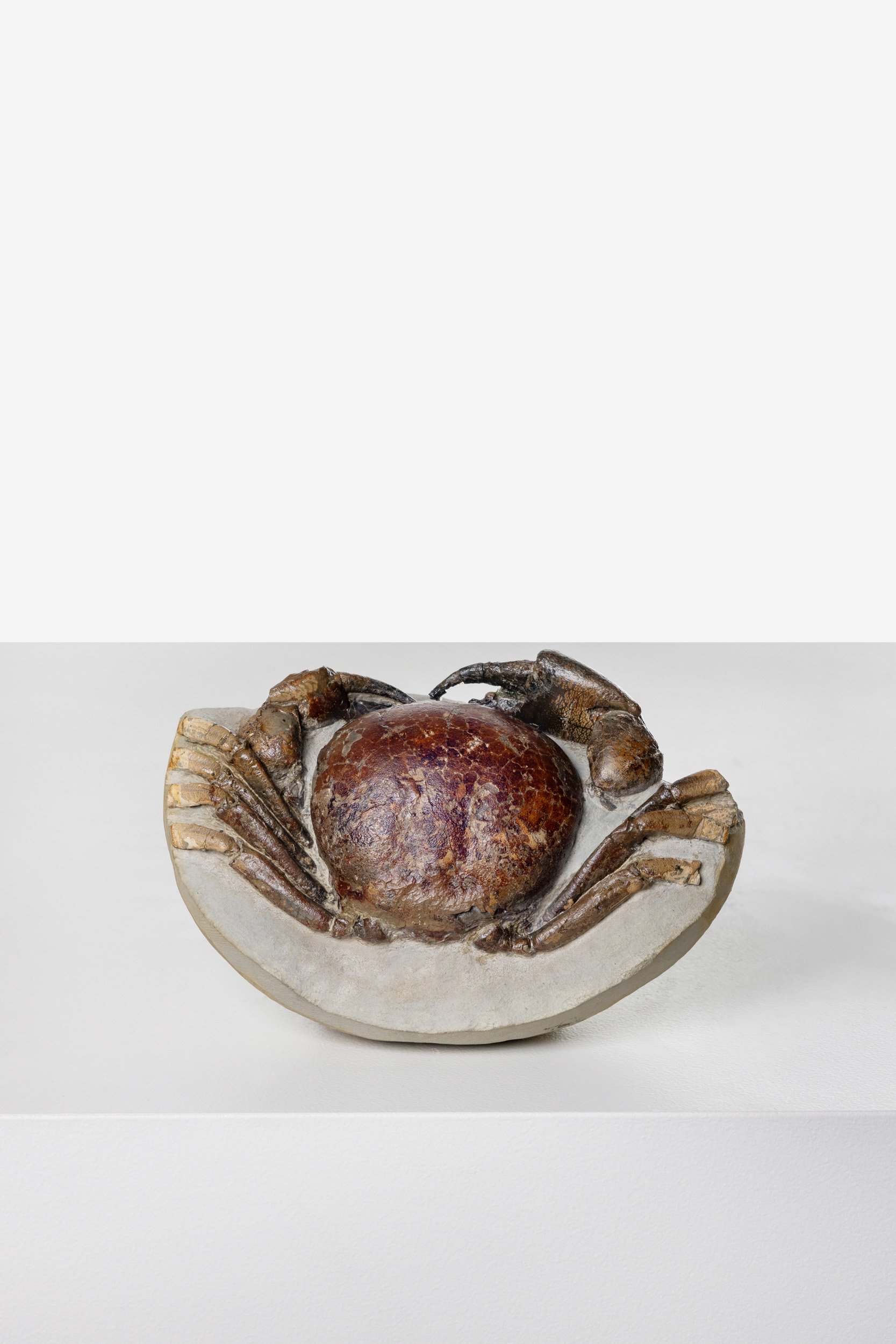 Image 1 of 2
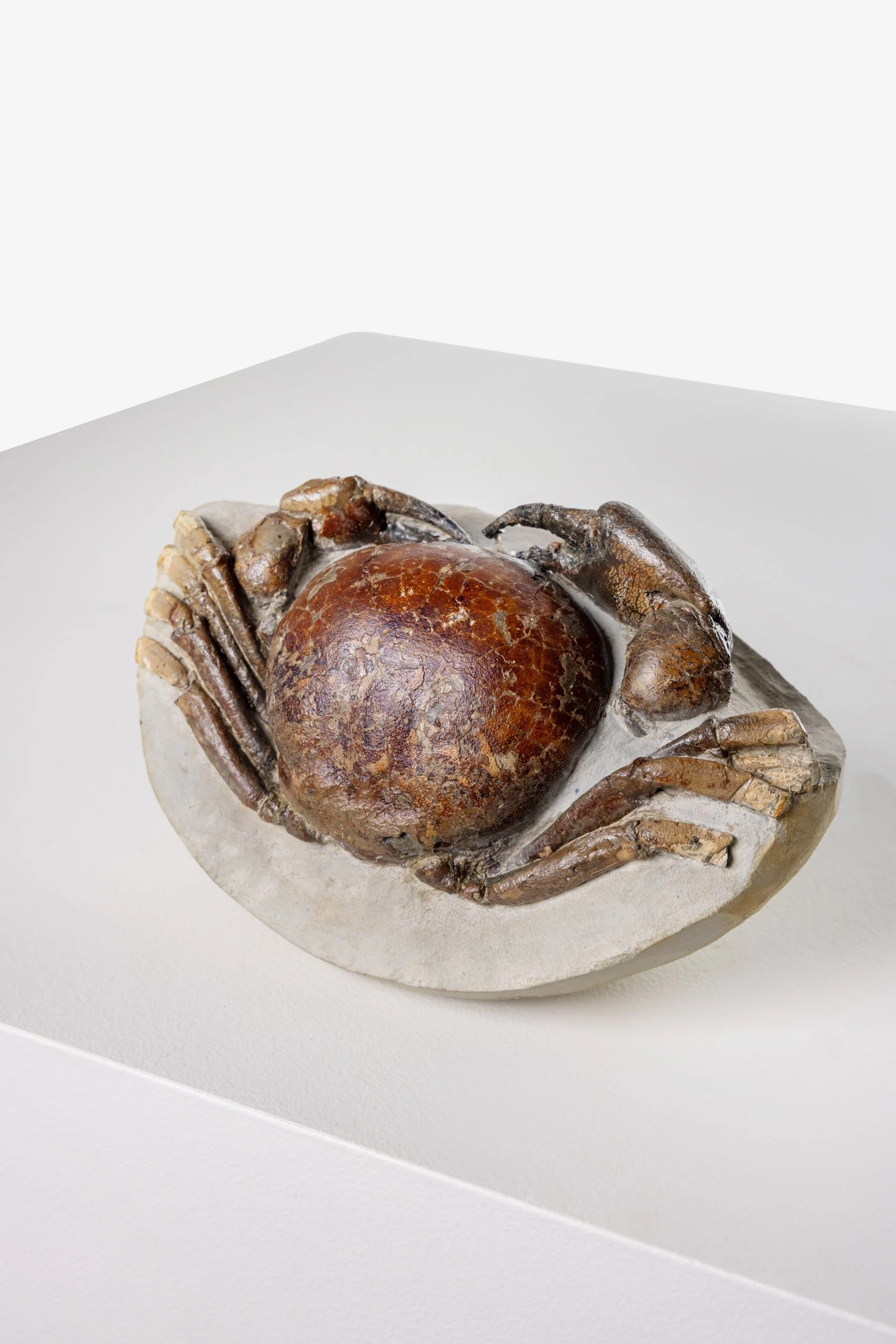 Image 2 of 2