Gobi Desert, Mongolia
Late Cretaceous – ~80 million years old
18.30 kg | 330 × 400 × 150 mm
This remarkable nest preserves four Hadrosaur eggs in their original sedimentary matrix, capturing a frozen moment from the Late Cretaceous. Hadrosaurs, often called “duck-billed dinosaurs”, were large, herbivorous dinosaurs that moved in herds and nested in colonies, returning seasonally to lay their eggs in carefully constructed ground nests.
Buried rapidly by sand and flood sediments in the ancient Gobi landscape, the eggs were protected from erosion and predation. Over millions of years, mineral-rich groundwater replaced the original shell material, turning the nest to stone while retaining its rounded forms and surface texture.
Gobi Desert, Mongolia
Late Cretaceous – ~80 million years old
18.30 kg | 330 × 400 × 150 mm
This remarkable nest preserves four Hadrosaur eggs in their original sedimentary matrix, capturing a frozen moment from the Late Cretaceous. Hadrosaurs, often called “duck-billed dinosaurs”, were large, herbivorous dinosaurs that moved in herds and nested in colonies, returning seasonally to lay their eggs in carefully constructed ground nests.
Buried rapidly by sand and flood sediments in the ancient Gobi landscape, the eggs were protected from erosion and predation. Over millions of years, mineral-rich groundwater replaced the original shell material, turning the nest to stone while retaining its rounded forms and surface texture.

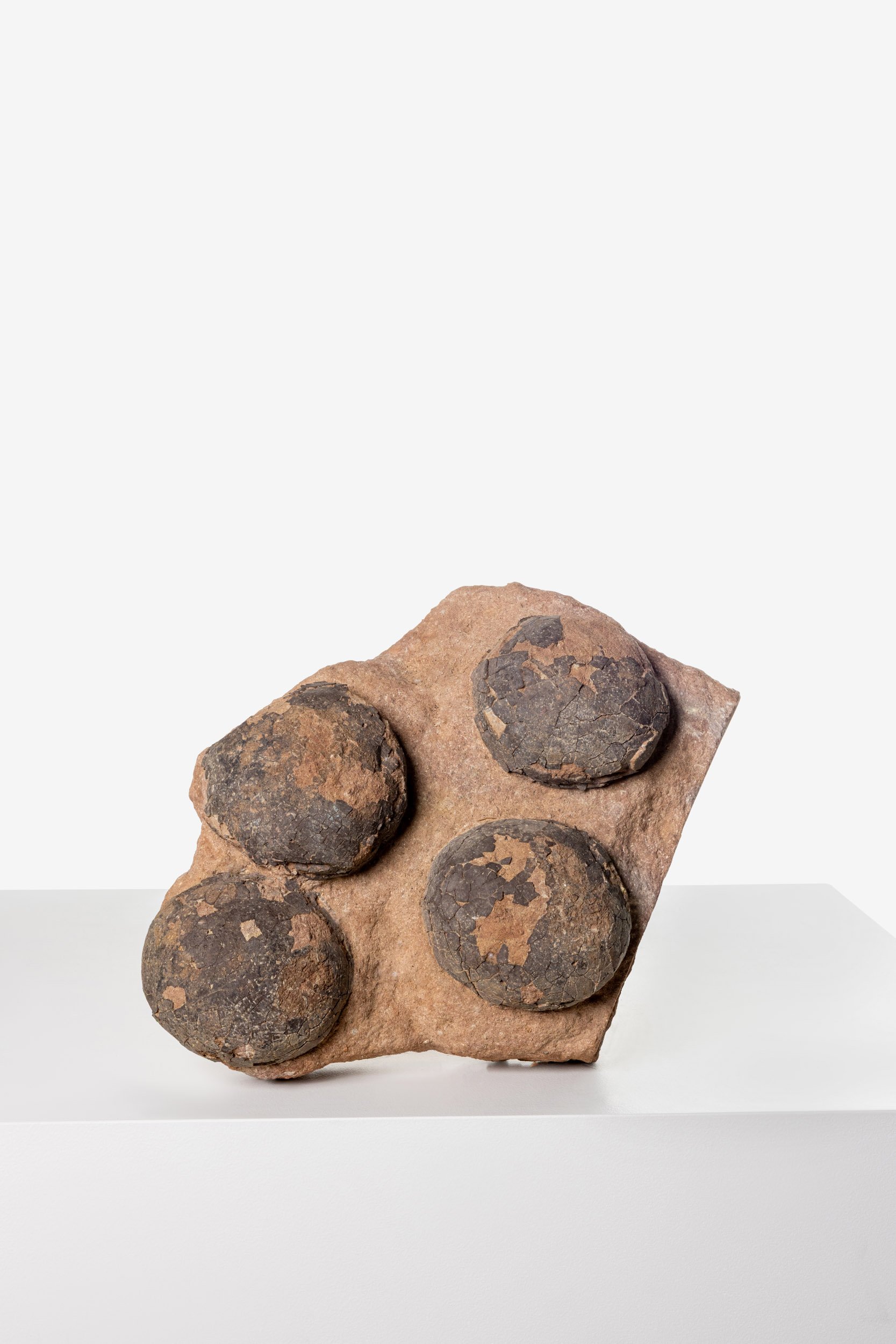 Image 1 of 3
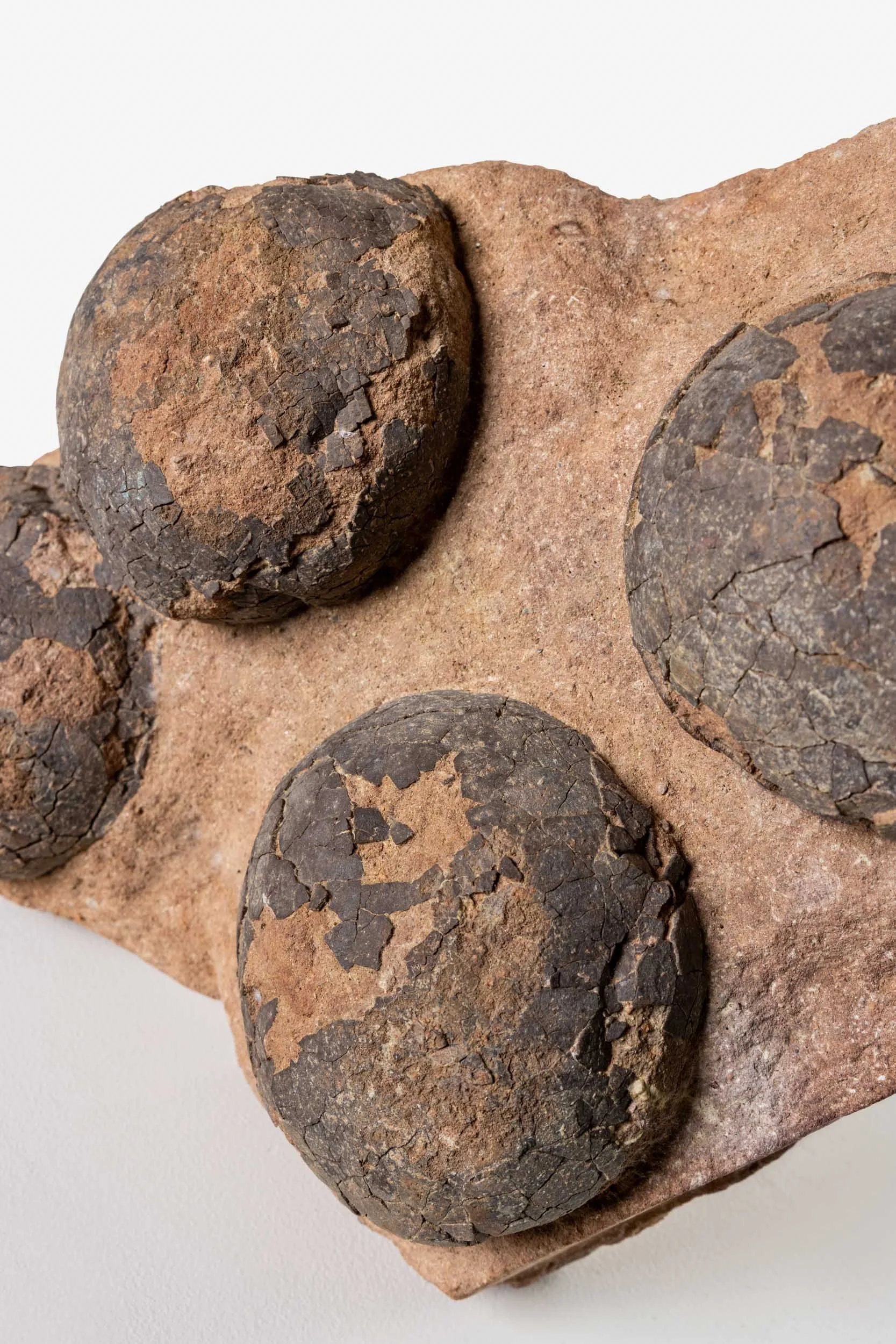 Image 2 of 3
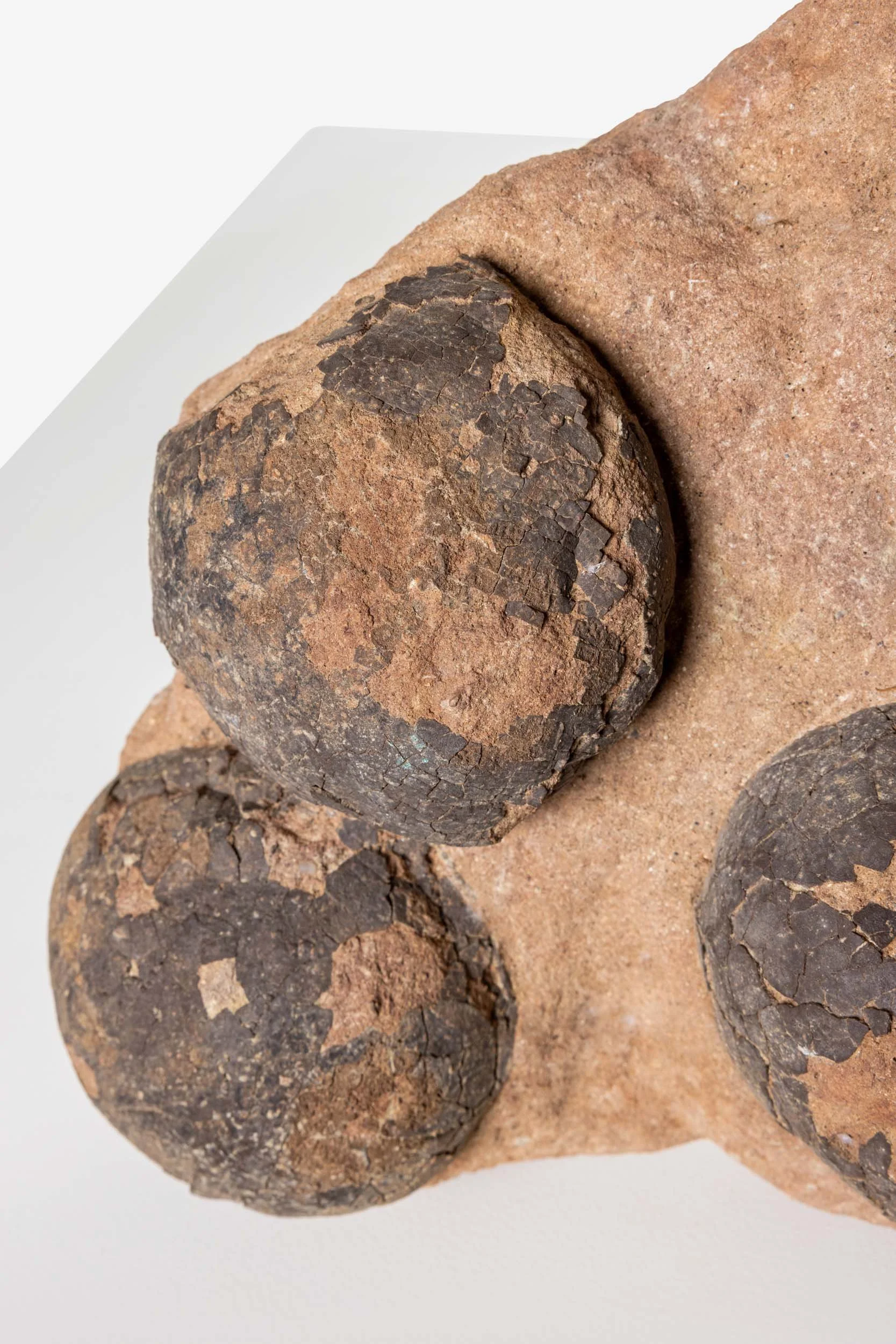 Image 3 of 3