South Carolina, USA
Pleistocene – ~15,000 years old
A preserved fragment of the Ice Age. This fossilised Mammoth tusk once belonged to a colossal, shaggy-coated herbivore that roamed North America during the late Pleistocene. Mammoths used their sweeping, curved tusks to forage beneath snow, strip bark from trees, and defend against predators.
Composed of dense ivory formed from dentine, the tusk displays natural growth layering and earthy mineral staining acquired during burial. Over thousands of years, mineral-rich groundwater gradually fossilised the structure, transforming organic ivory into stone while preserving its distinctive internal patterning.
Compact yet powerful in presence, this 600 g specimen offers a tangible connection to the final chapter of the Ice Age.
Dimensions: 140 × 90 × 60 mm
Weight: 600 g
South Carolina, USA
Pleistocene – ~15,000 years old
A preserved fragment of the Ice Age. This fossilised Mammoth tusk once belonged to a colossal, shaggy-coated herbivore that roamed North America during the late Pleistocene. Mammoths used their sweeping, curved tusks to forage beneath snow, strip bark from trees, and defend against predators.
Composed of dense ivory formed from dentine, the tusk displays natural growth layering and earthy mineral staining acquired during burial. Over thousands of years, mineral-rich groundwater gradually fossilised the structure, transforming organic ivory into stone while preserving its distinctive internal patterning.
Compact yet powerful in presence, this 600 g specimen offers a tangible connection to the final chapter of the Ice Age.
Dimensions: 140 × 90 × 60 mm
Weight: 600 g

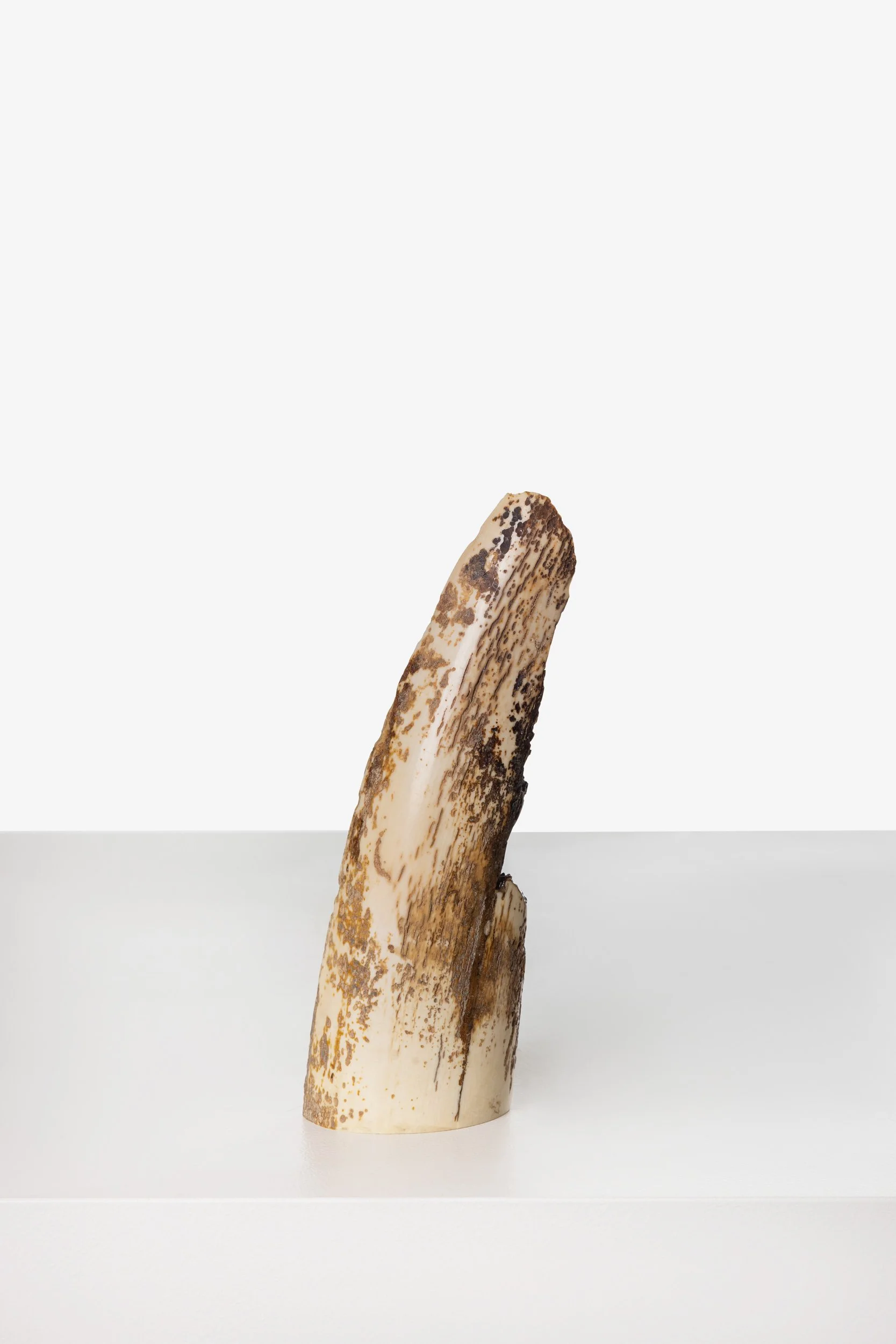 Image 1 of 2
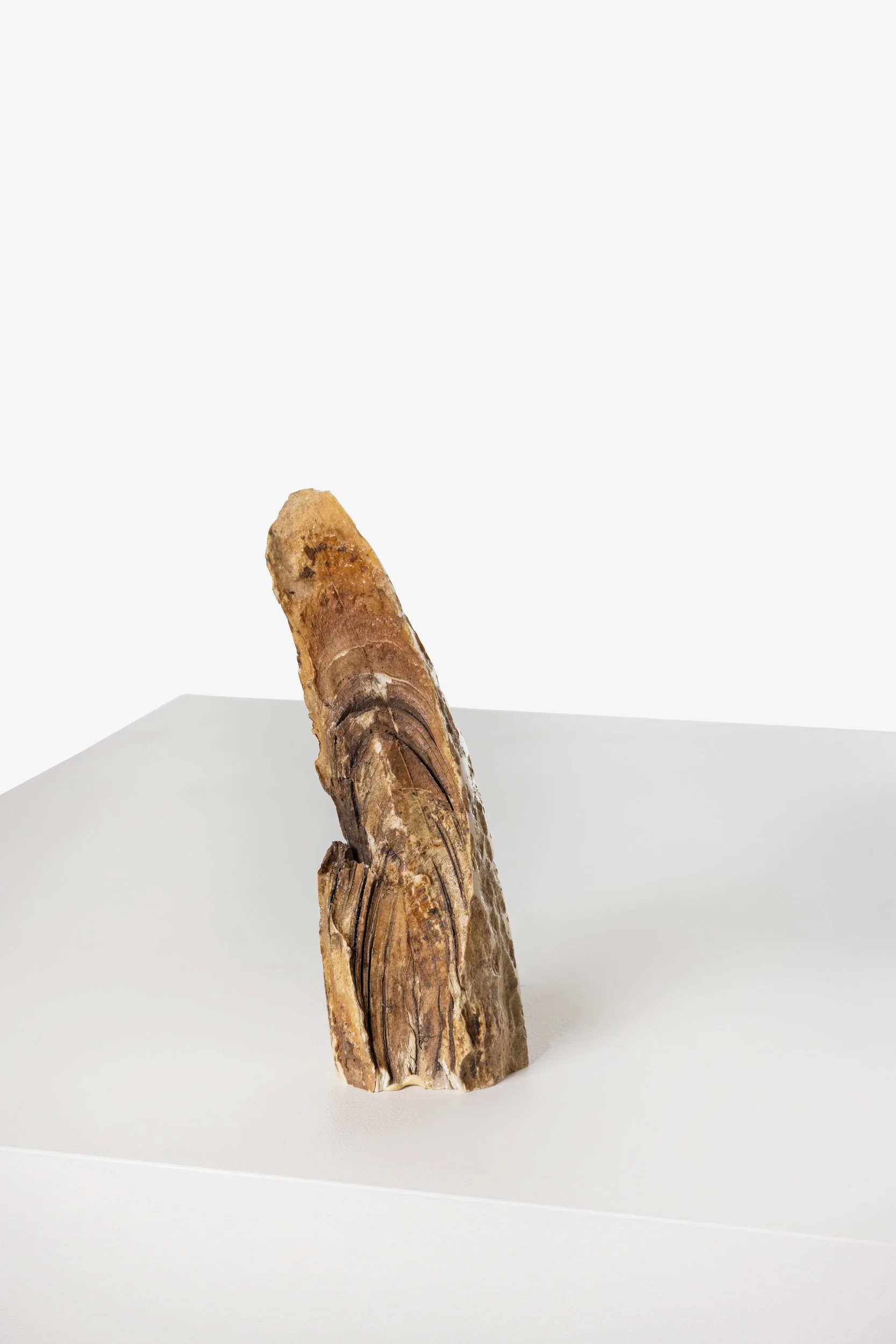 Image 2 of 2