Ouled Abdoun Basin, Morocco - Late Cretaceous (~70 million years old)
This impressive fossil preserves a section of jaw from a Mosasaur, the dominant marine predator of the Late Cretaceous seas. Mosasaurs were powerful marine reptiles, closely related to modern monitor lizards and snakes, that ruled the world’s oceans during the final age of dinosaurs.
The specimen displays a dramatic row of well-preserved conical teeth still set within the original jaw matrix. These sharp, enamelled teeth were perfectly adapted for grasping slippery prey such as fish, ammonites, and other marine reptiles. The spacing of the tooth sockets and the robust jaw structure illustrate the formidable bite that made mosasaurs apex predators of their time.
Recovered from the rich phosphate deposits of the Ouled Abdoun Basin in Morocco, one of the world’s most productive Cretaceous fossil sites, this large jaw segment offers both scientific significance and striking sculptural presence.
At over 60 cm in length, the piece reads as both a fossil specimen and a dramatic natural artefact from an ancient ocean ecosystem.
Weight: 6.35 kg
Dimensions: 630 × 220 × 80 mm
Ouled Abdoun Basin, Morocco - Late Cretaceous (~70 million years old)
This impressive fossil preserves a section of jaw from a Mosasaur, the dominant marine predator of the Late Cretaceous seas. Mosasaurs were powerful marine reptiles, closely related to modern monitor lizards and snakes, that ruled the world’s oceans during the final age of dinosaurs.
The specimen displays a dramatic row of well-preserved conical teeth still set within the original jaw matrix. These sharp, enamelled teeth were perfectly adapted for grasping slippery prey such as fish, ammonites, and other marine reptiles. The spacing of the tooth sockets and the robust jaw structure illustrate the formidable bite that made mosasaurs apex predators of their time.
Recovered from the rich phosphate deposits of the Ouled Abdoun Basin in Morocco, one of the world’s most productive Cretaceous fossil sites, this large jaw segment offers both scientific significance and striking sculptural presence.
At over 60 cm in length, the piece reads as both a fossil specimen and a dramatic natural artefact from an ancient ocean ecosystem.
Weight: 6.35 kg
Dimensions: 630 × 220 × 80 mm

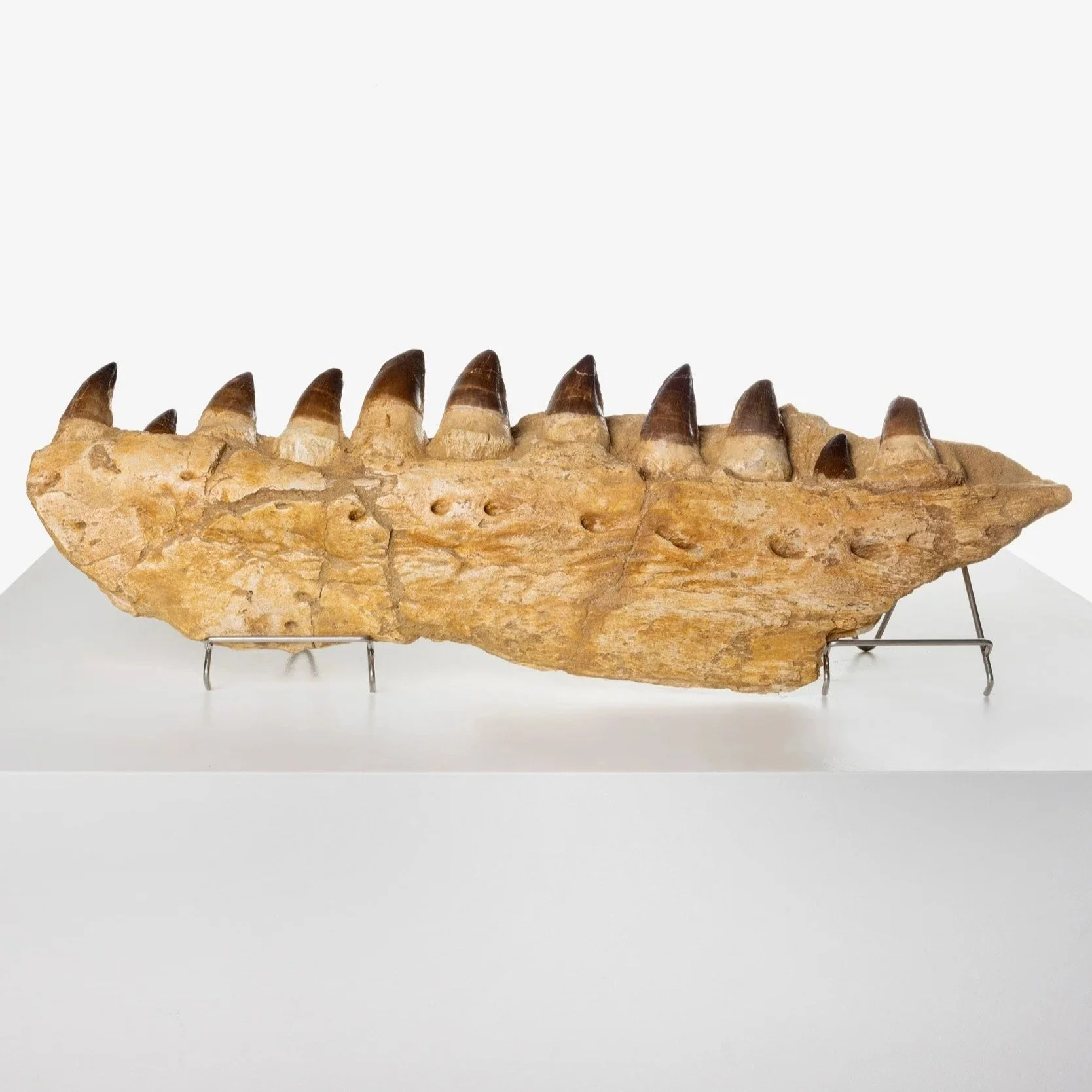 Image 1 of 3
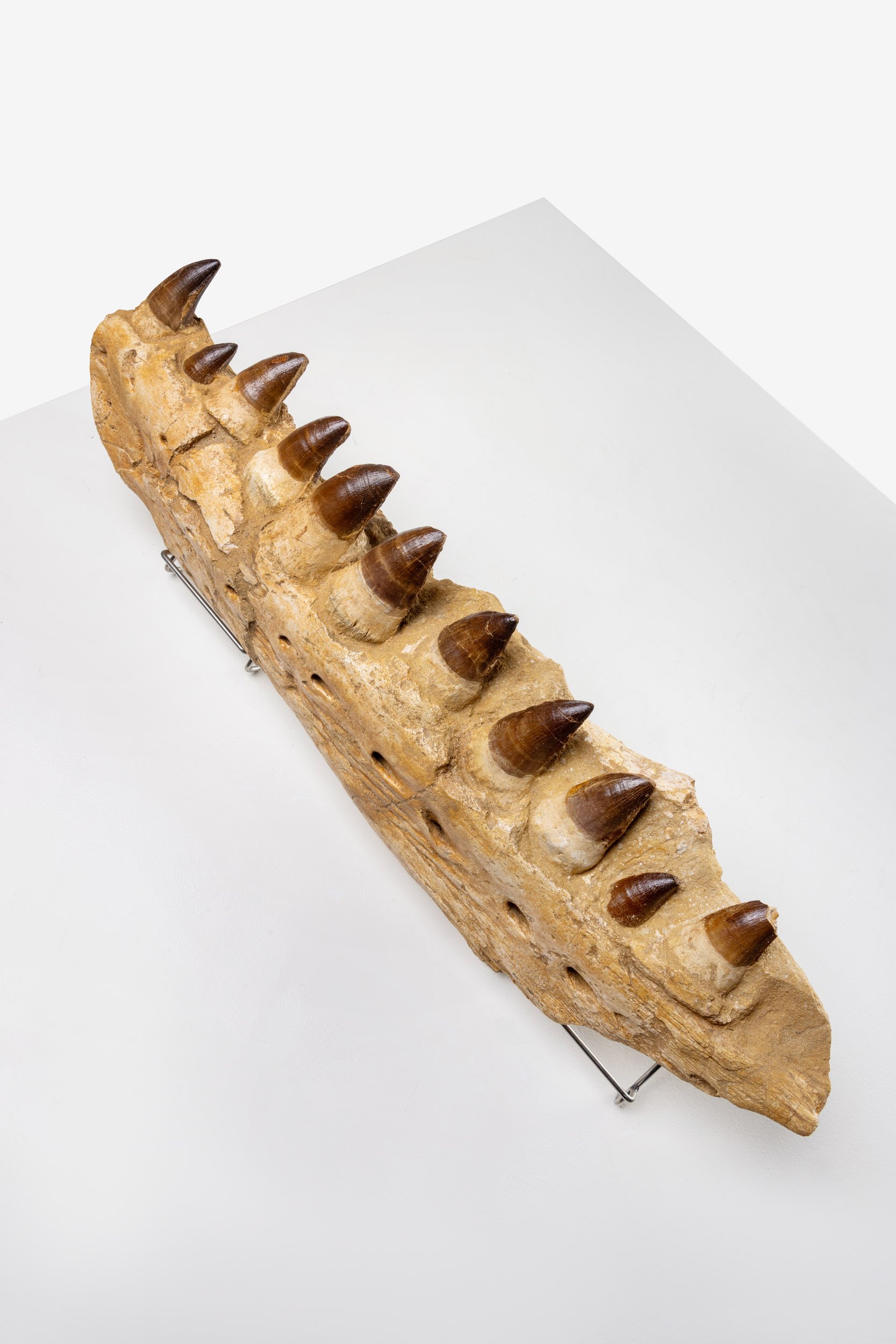 Image 2 of 3
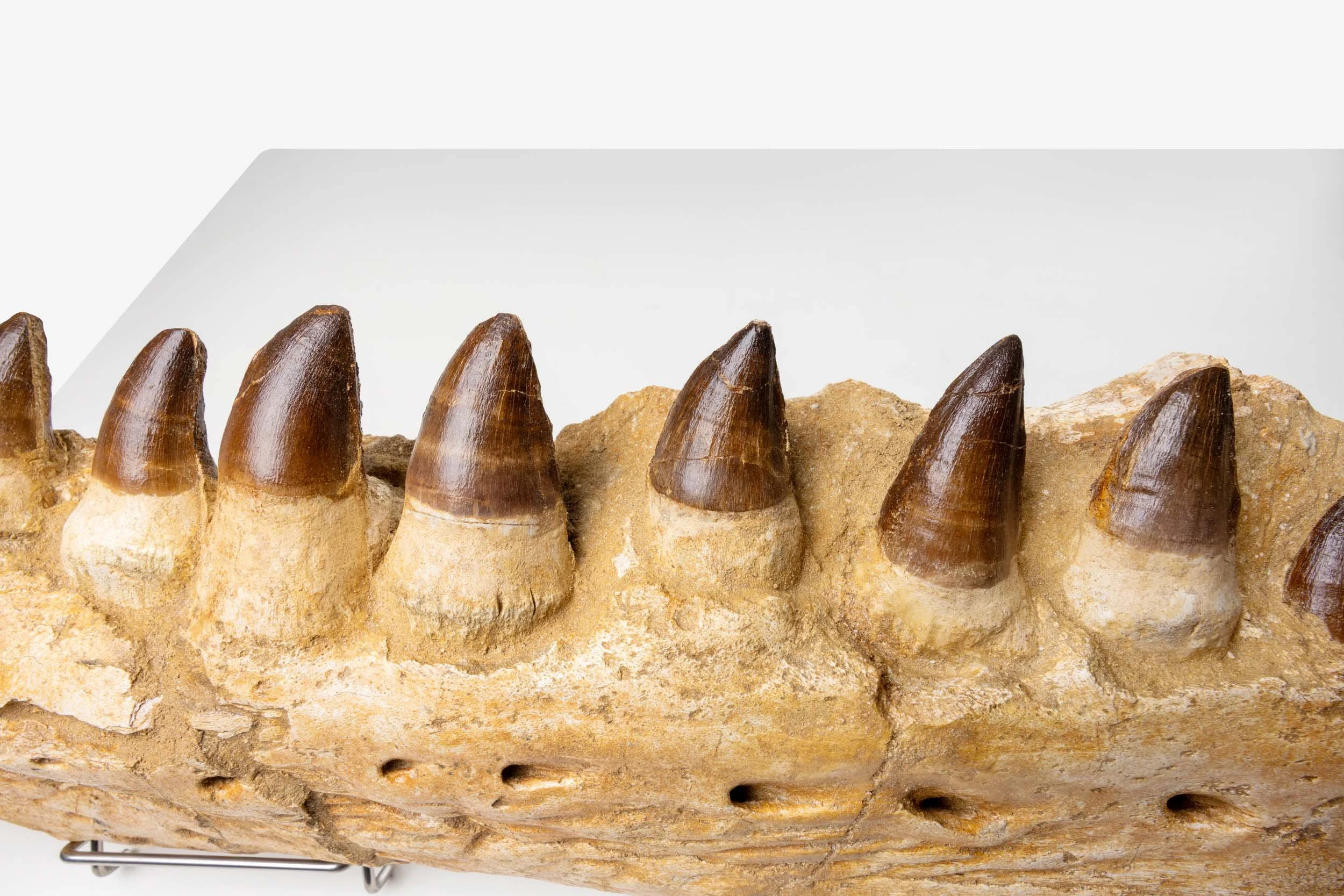 Image 3 of 3