fossils
Life, held in stone.
An accident that held
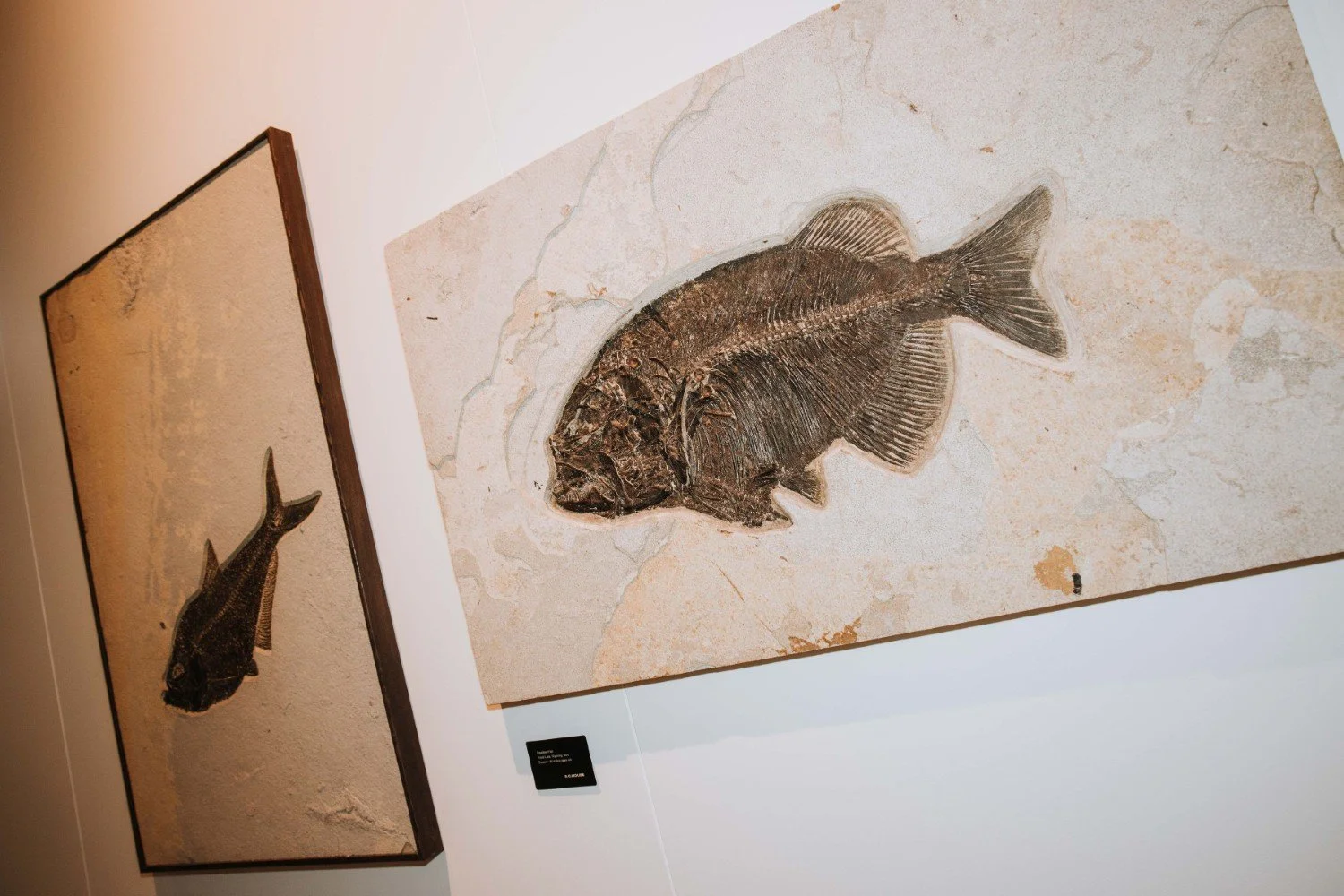
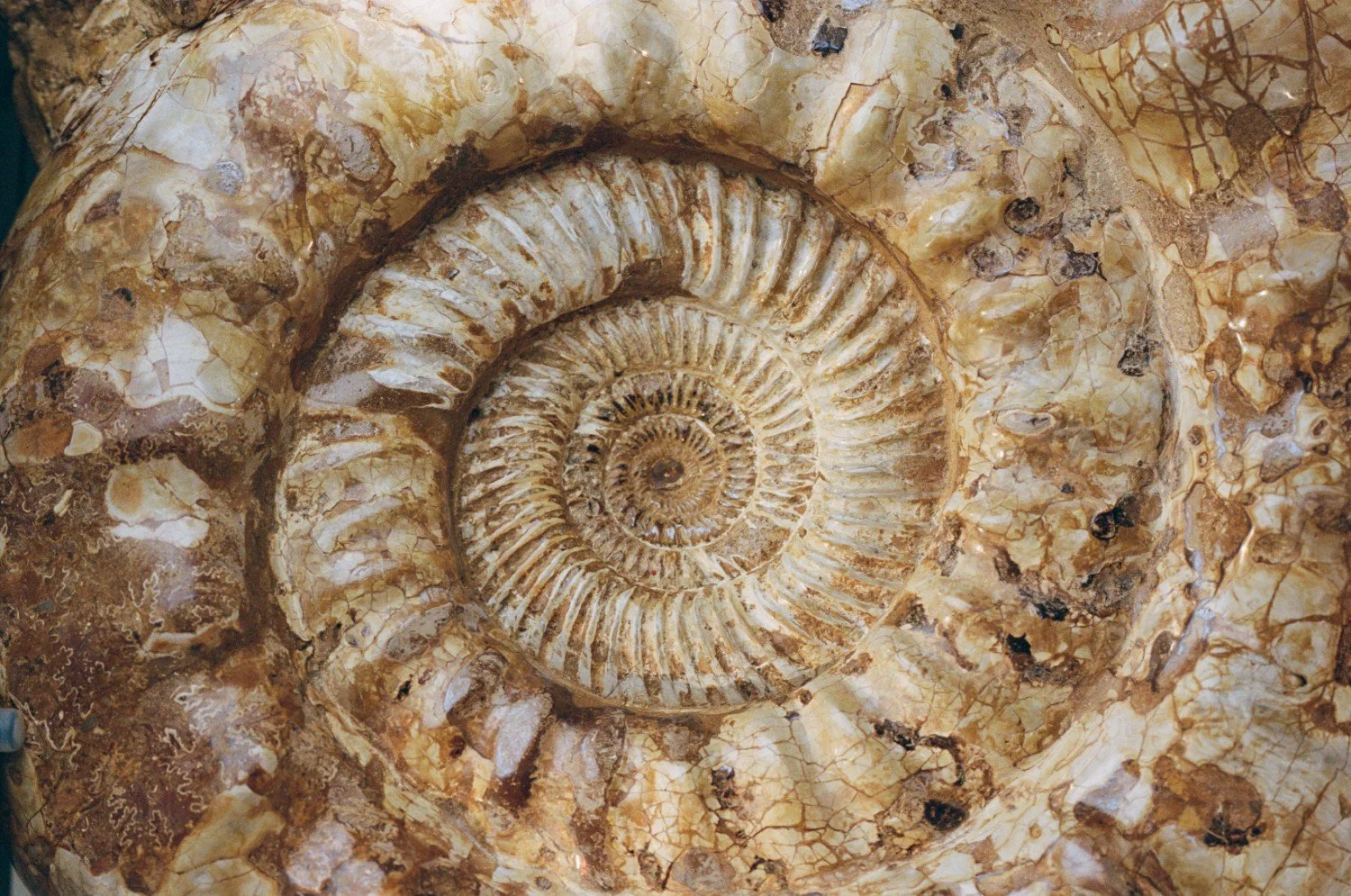
Soft tissue collapses within days. Bone dissolves, sediment shifts, and what remains is usually crushed, scattered or replaced beyond recognition. Fossilisation is a sequence of near-misses, and almost nothing completes it intact. Preservation this clean isn't the expected outcome of deep time — it's the exception that survived it.
Preservation
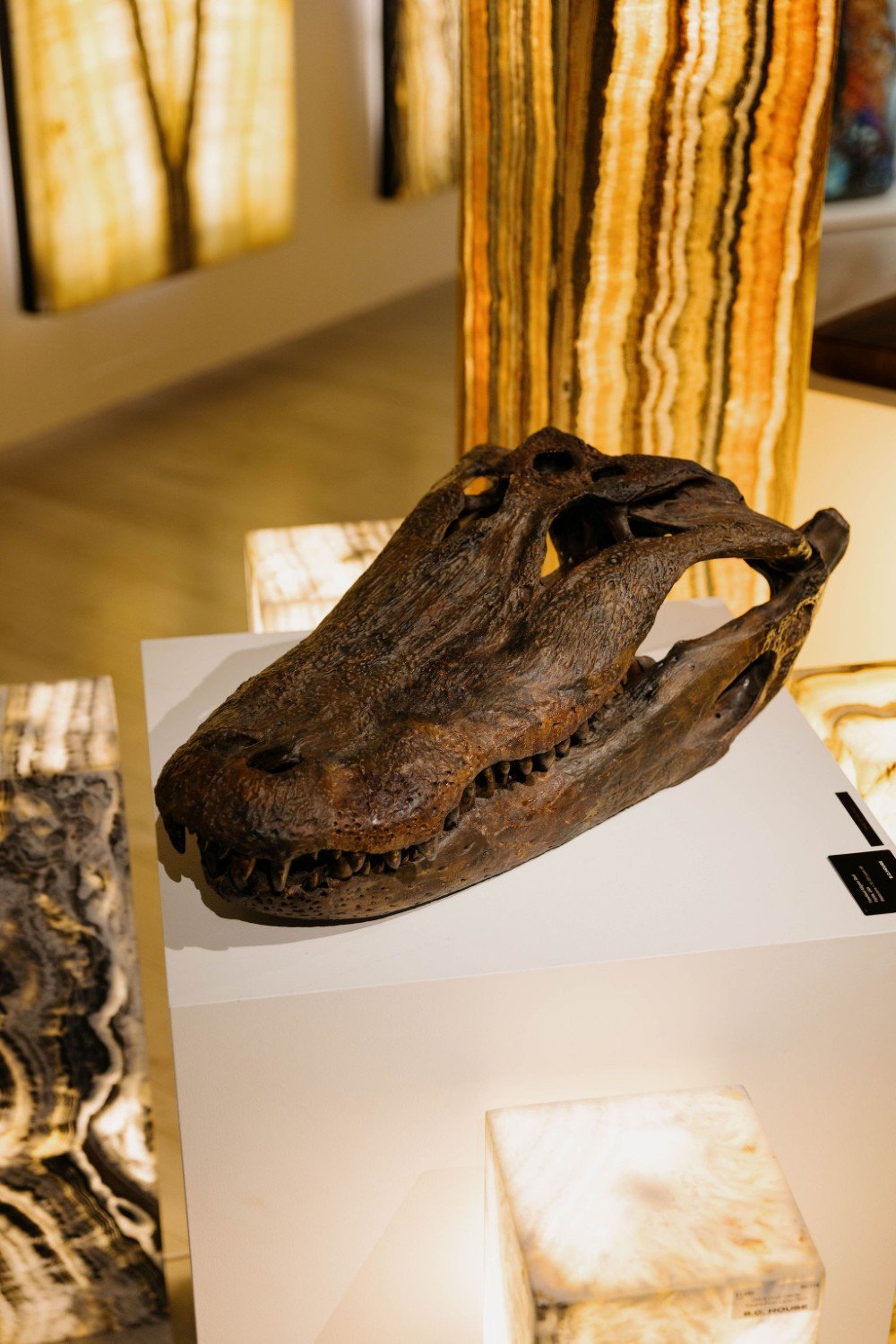
Age is easy. Almost any quarry will produce something a hundred million years old, and most of it is unreadable — a shape suggested rather than described, assembled from fragments that may not have belonged together. Legibility is the scarce quality here, not antiquity.
So we look for clean articulation, undamaged detail, and a surface that still reads as anatomy. The specimens worth having are the ones where you can see what the animal actually was.
The record of what lived
Selection
Featured pieces
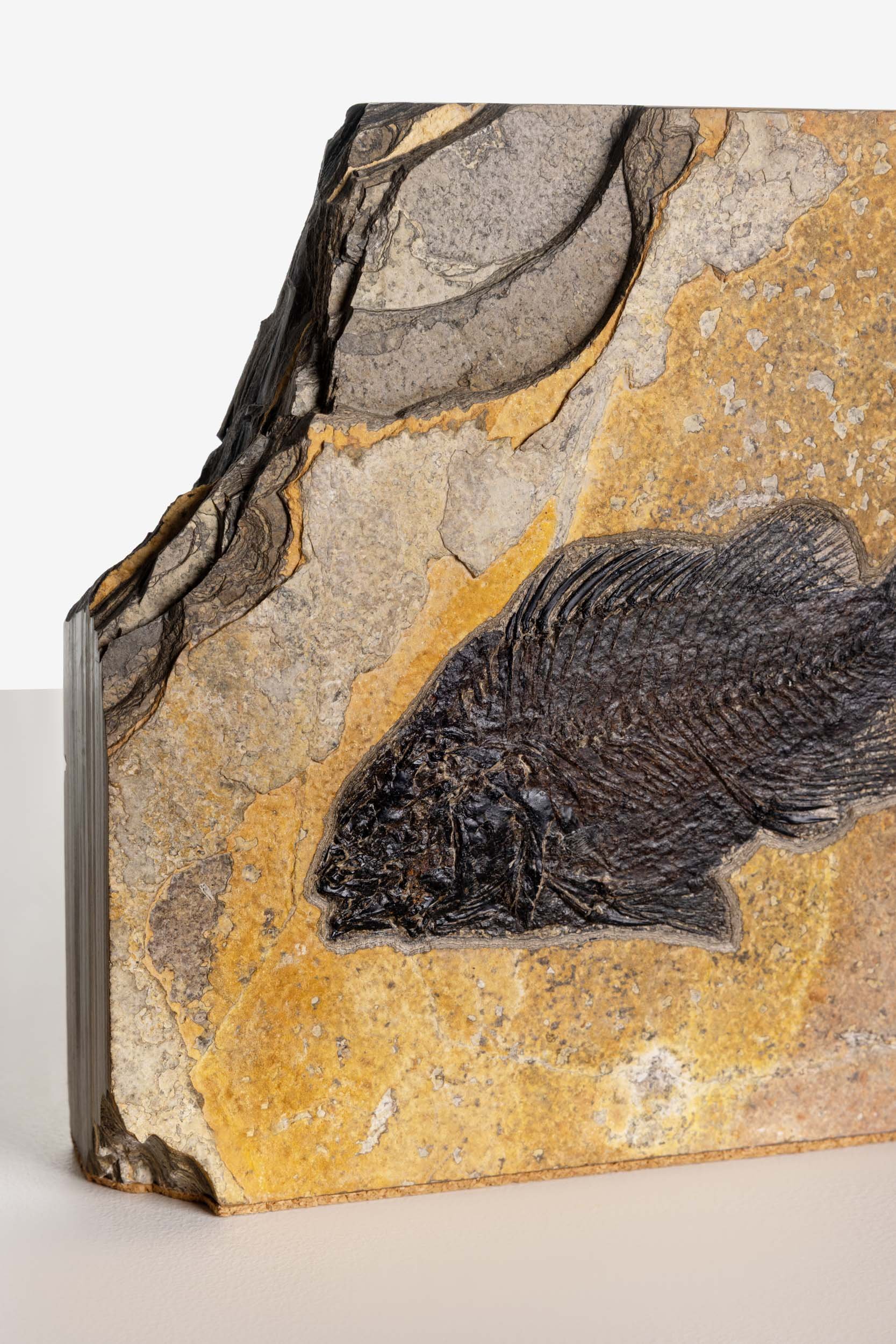
A remarkably preserved fossil fish from the legendary Fossil Lake deposit in Wyoming, this specimen dates back over 50 million years to the Eocene epoch. Formed when fine lakebed sediment rapidly buried aquatic life, the exceptional detail seen here was locked in by pressure and mineralisation over millennia. These fossils are celebrated for their scientific and aesthetic value, each a natural time capsule from Earth’s ancient past, ideal for collectors, educators, or design spaces seeking depth and story.
Location of Origin: Fossil Lake, Wyoming, USA
Eocene ~ 50 million years old
Weight: 10.60 kg
Dimensions: 270 x 290 x 70 mm
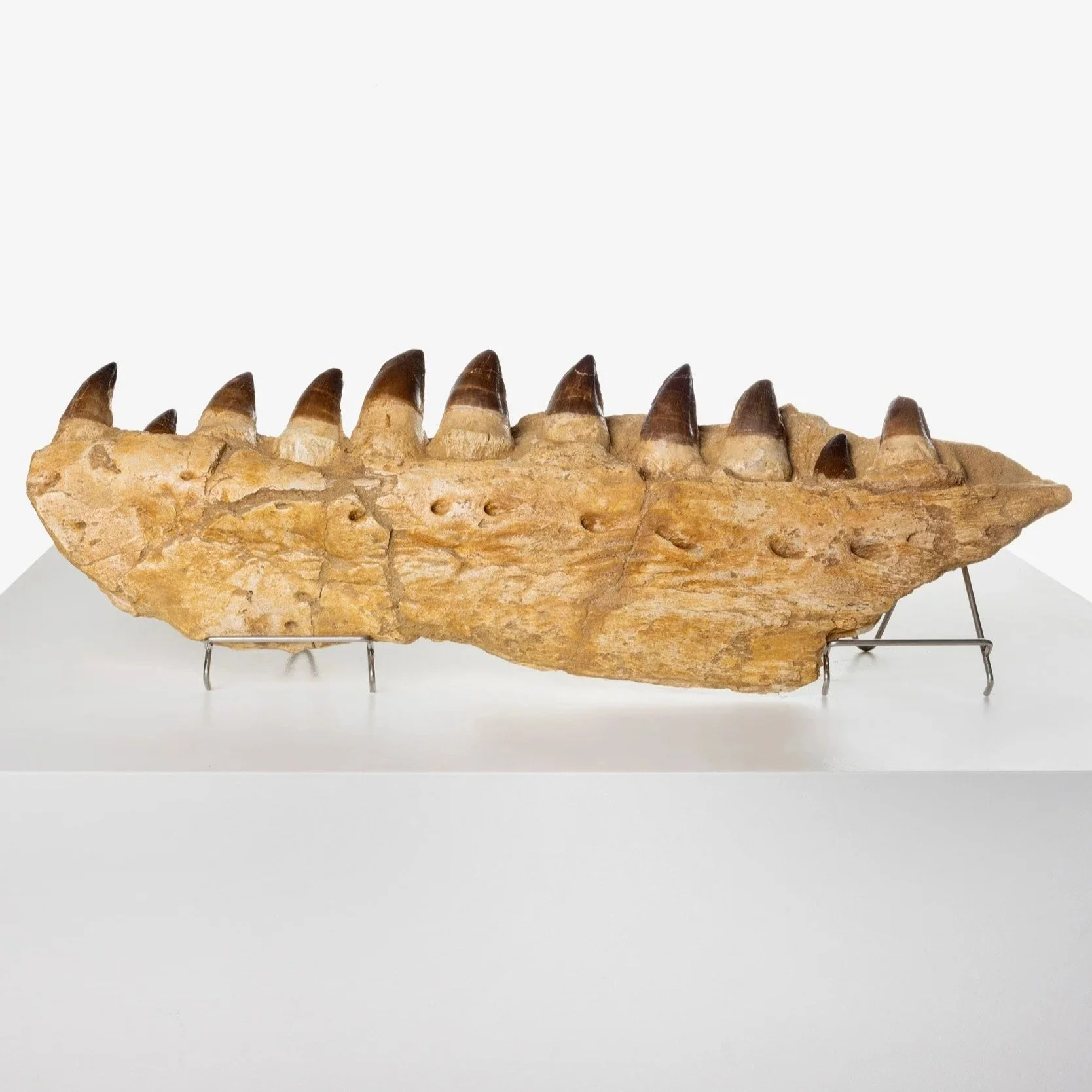
Ouled Abdoun Basin, Morocco - Late Cretaceous (~70 million years old)
This impressive fossil preserves a section of jaw from a Mosasaur, the dominant marine predator of the Late Cretaceous seas. Mosasaurs were powerful marine reptiles, closely related to modern monitor lizards and snakes, that ruled the world’s oceans during the final age of dinosaurs.
The specimen displays a dramatic row of well-preserved conical teeth still set within the original jaw matrix. These sharp, enamelled teeth were perfectly adapted for grasping slippery prey such as fish, ammonites, and other marine reptiles. The spacing of the tooth sockets and the robust jaw structure illustrate the formidable bite that made mosasaurs apex predators of their time.
Recovered from the rich phosphate deposits of the Ouled Abdoun Basin in Morocco, one of the world’s most productive Cretaceous fossil sites, this large jaw segment offers both scientific significance and striking sculptural presence.
At over 60 cm in length, the piece reads as both a fossil specimen and a dramatic natural artefact from an ancient ocean ecosystem.
Weight: 6.35 kg
Dimensions: 630 × 220 × 80 mm
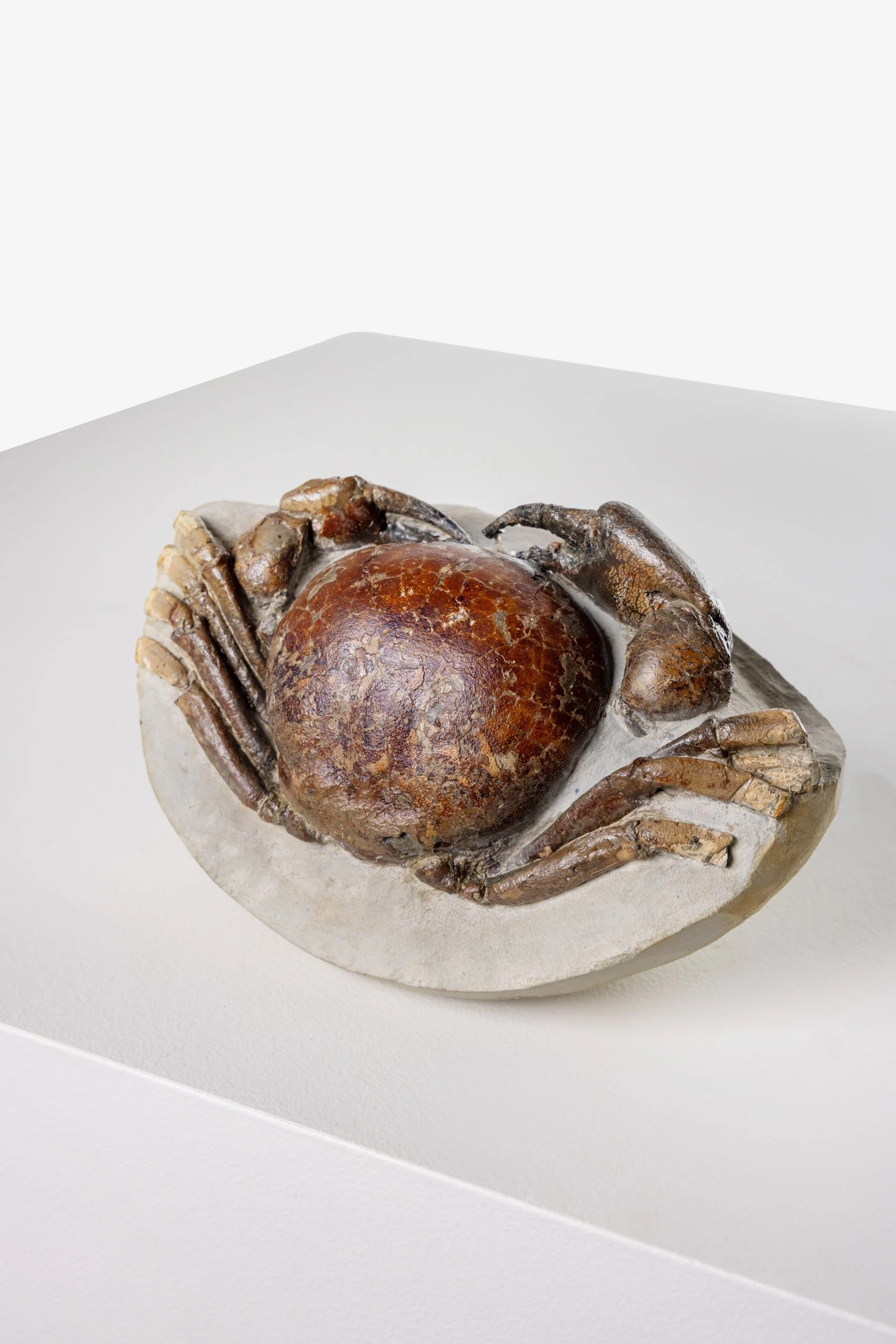
North Canterbury, New Zealand — Miocene (~20 million years old)
This beautifully preserved fossil crab originates from the renowned marine sediment deposits of North Canterbury, New Zealand. During the Miocene epoch, much of this region lay beneath shallow seas where crabs and other marine life thrived along the ocean floor.
Following the crab’s burial in fine sediment, mineral-rich waters gradually replaced organic material with stone, preserving the intricate structure of the carapace, claws, and segmented legs. Over millions of years the surrounding matrix hardened, protecting the fossil and allowing its remarkable form to endure.
The specimen displays a striking domed carapace framed by articulated limbs, creating a naturally sculptural composition. Both scientifically significant and visually compelling, it offers a rare glimpse into ancient marine ecosystems preserved in stone.
Weight: 2.7 kg
Dimensions: 110 × 180 × 110 mm
gallery